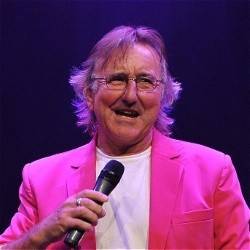
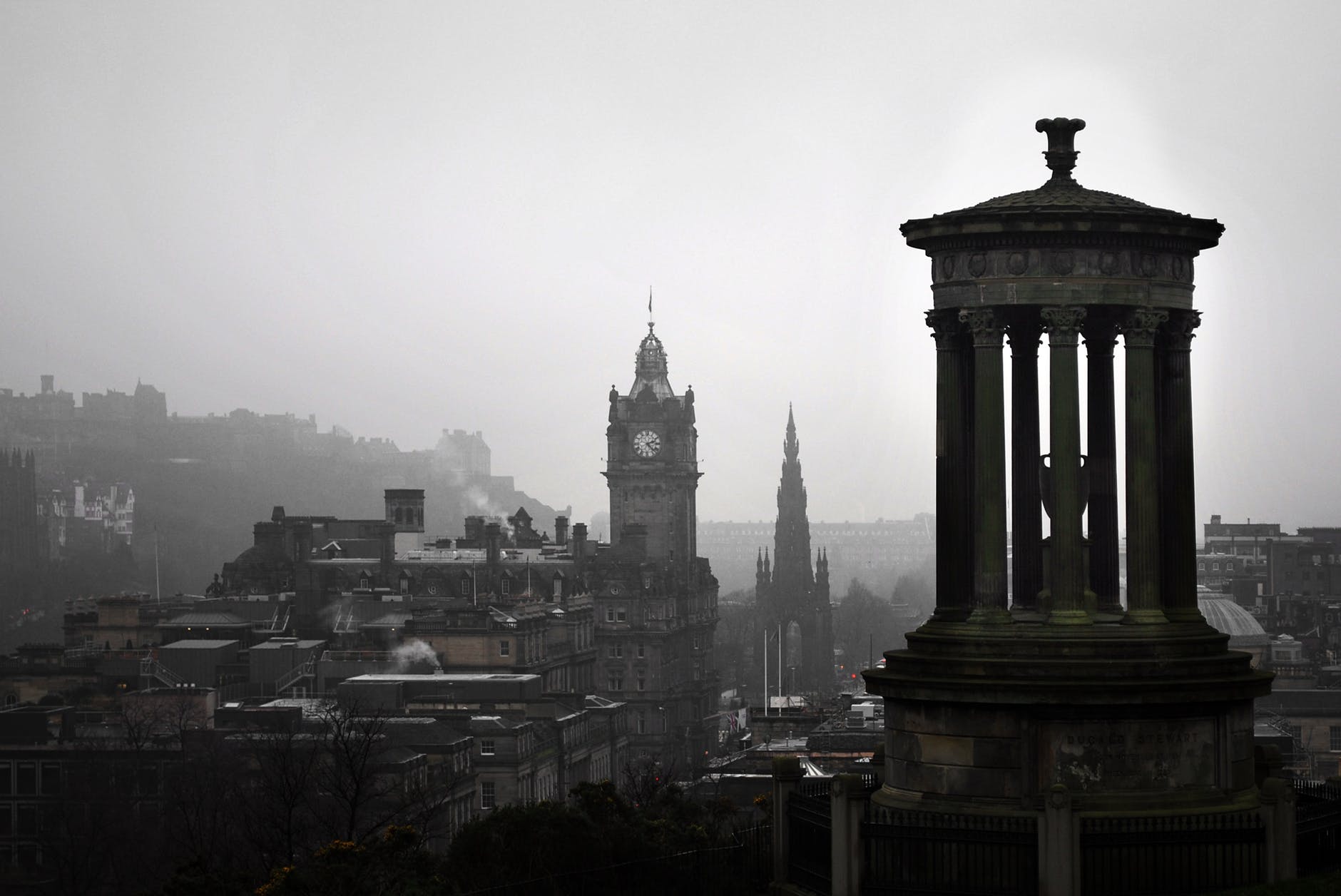
Nick Hennegan talks to Nick Barley, Director of the Edinburgh International Book Festival about the glorious return of the biggest open Arts festivals in the world!
Author Archives: Nick Hennegan
Today’s Pretty Literary Pub of The Day…
… opposite the Lyric Theatre, Hammersmith. It’s the Ram. The Hammersmith Ram, obs…! 🍺
Welsh Pub Writing HQ
I love writing in pubs. I’ve a new idea for the Edinburgh Fringe for next year. A new comedy drama. About a Brummie. Created in Wales 🏴

Aberdovey Bohemians
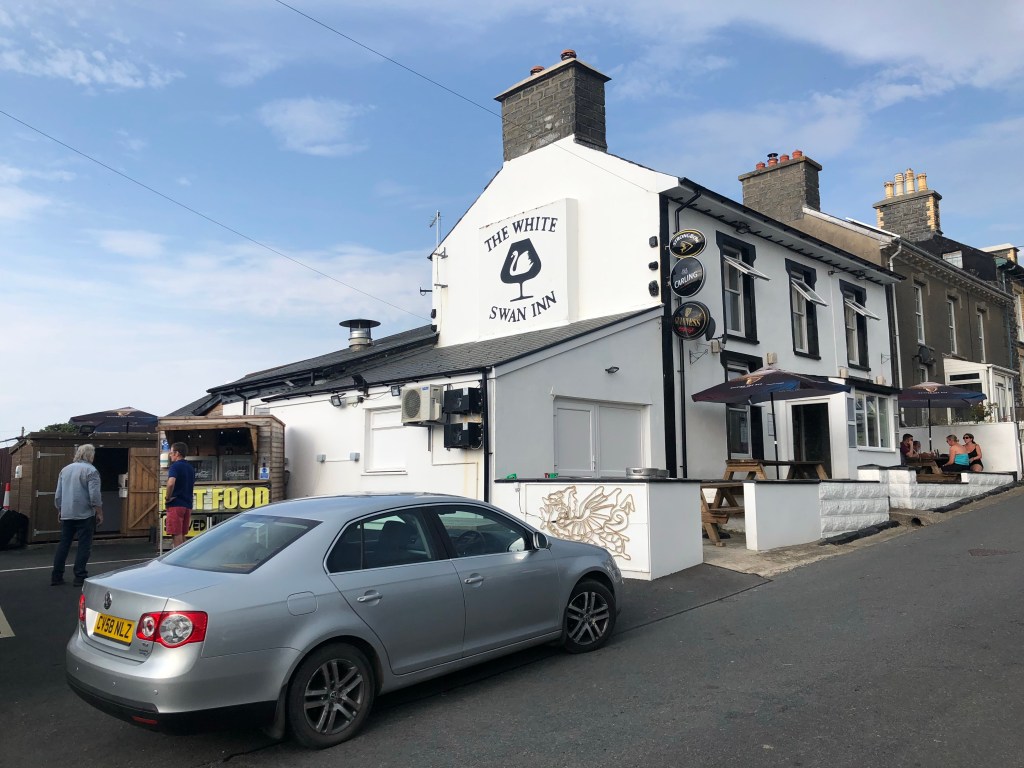
Nick’s off to wonderful Wales again. A couple of years ago, he discovered a rather unusual shop in the costal village of Aberdyfi.
Here we go then….

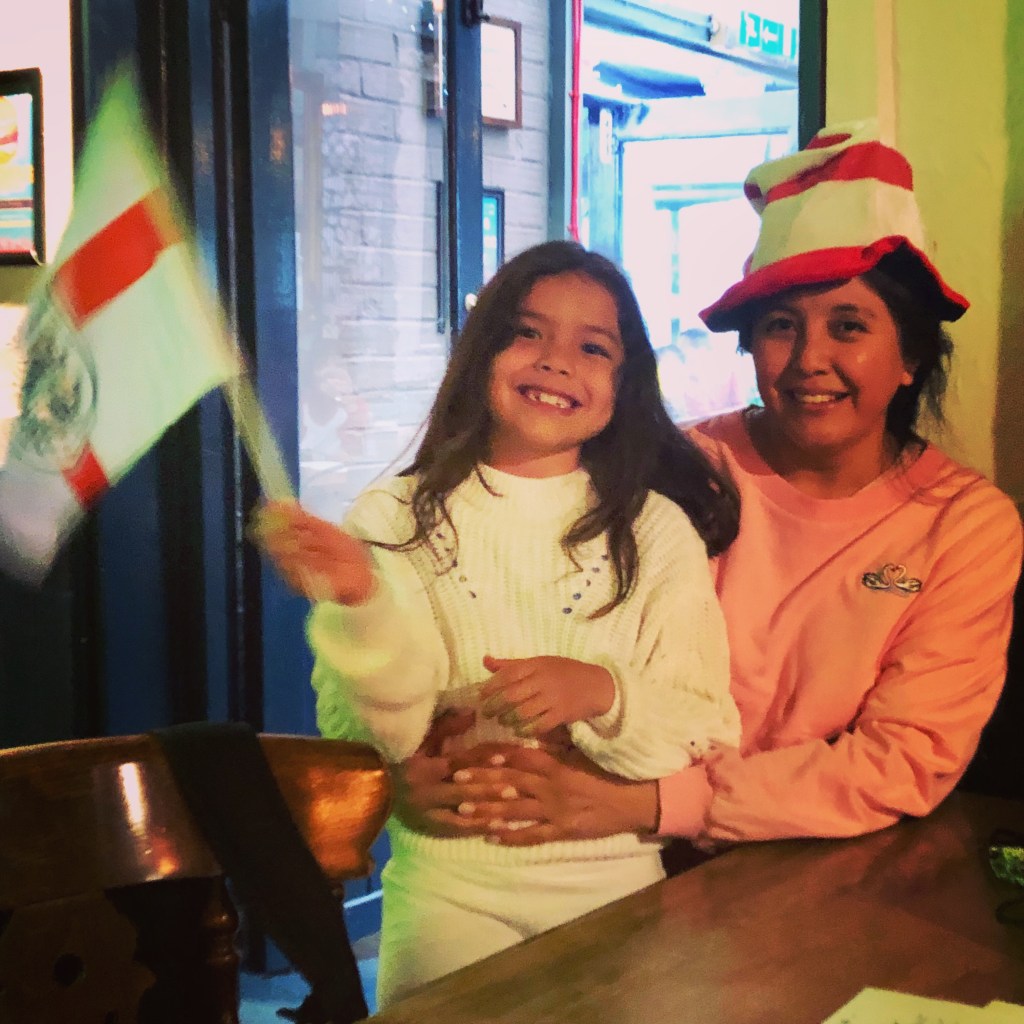
May the best team win. As long as it’s England! 🏴
It’s coming home, it’s coming… Theatre’s coming home!
Not wishing to dampen any expectations – by the time you read this, you will doubtless know the results of the Euro ’20 championships – but with all the talk of the popularity of football, especially the big occasions – many people have overlooked a fundamental truth about football and theatre. Because it is a fact that many times MORE people attend theatre every year than football matches.

Yep, everyone knows that theatre is posh and exclusive and football is common and popular But it ain’t true, folks. Now I speak as a council estate kid who left school with no qualifications but was crap at football. It’s certainly true that as a kid, theatre was never mentioned and football was, although occasionally one or two families on the estate might go to a Pantomime at Christmas. And yet the figures speak for themselves. Theatre is far more popular in this country than football. Amen. Remember that Government. The West End alone generates 3% of the country’s economic output: £51 billion of GVA per year – more than the City of London! The West End generates taxes of £17 billion per annum. Theatre attendances just in the capital are higher than for the whole of the Premier League put together. The analysis showed there are 241 professional theatres in London, with more than 110,000 seats and attendances of 22 million. That compares with 13 million attendees for all of England’s Premier League football games.
But, having said that, it’s not all good news. As we reopen and theatre and live entertainment returns, MAKERS of theatre – of which I am one – must remember that although theatre is more popular than football, there are still large swathes of our country and communities that don’t get involved or attend theatre in any way. True, not everyone attends football – as I’ve just said – but whereas we all know how theatrical football is – there are goodies and baddies, total suspense, cliffhangers and resolution throughout the two acts… sorry, halves… we should be aware, that on so many levels, theatre in its many forms can be BIGGER than football. And truly life changing. That’s why I launched the first ever Diploma for Creative Producing (www.TheatreProducerTraining.com) and we’ve launched the West London People’s Theatre Company (www.MaverickPeoplesCompany.com) Both initiatives increase access to theatre and the arts. Which is really where we need to be. On the ball…!
It’s coming home! Fringe and Soccer madness!
Summary
Memories of 1966, a new play not written for the Edinburgh Festival Fringe and we’re Literary Pub Crawling again! Nick Hennegan’s barmy Bohemian world..! — Send in a voice message: https://anchor.fm/londonliterarypubs/message
Euro 2020: is this ‘the greatest therapy session England ever had’?
By James Rumbold, Senior Lecturer in Sport and Exercise Psychology, Course Leader for MSc Sport and Exercise Psychology (BPS-Accredited), Sheffield Hallam University. From The Conversation.

Crowds leave Wembley.
“Well how about that”, one BBC commentator said, as full-time was called on the England-Ukraine quarter final match of the men’s 2020 European Championship, and players hugged on the pitch. “England dominating and giving the nation not only something to cheer with, an outstanding performance and four goals, but also”, he paused, “a largely stress-free evening.”
Stress-free evenings are very much in order for a lot of people after 15 months of pandemic and all the worry that has gone with that. From a psychological perspective, fans’ perceptions of their team’s progress throughout the Euros will resemble many people’s perceptions of daily life during the COVID crisis – a lack of control over events and uncertainty over what will happen next.
Another of the BBC’s commentators talking viewers through the Ukraine match said it had been “like the greatest therapy session England has ever had”. And if so, there’s no doubt it is a mass therapy exercise, especially after the nation was gripped by England’s winning semi-final performance against Denmark.
Football (whether you like it or not) is the world’s favourite sport. In England, it’s considered the national game. An estimated 1.9 million Britons played the game at least twice a month in 2020. And England’s major tournament matches are consistently watched by over 10 million households.
Social ingroup
Research shows that international football tournaments can take us on a rollercoaster of emotions. The more we identify with our team, the more our feelings are connected to their performance. In extreme cases, this emotional ride while watching football has been linked to a higher risk of heart attacks.Displays of allegiance among the fans during the Euro 2020 quarterfinal between England and Ukraine. Marcello Valeri / Alamy Live News
When the England team beat Germany in the last 16, they conquered an arch nemesis. In beating Denmark and getting into the final two, England have reached their first European championship final – their first international tournament final since the 1966 World Cup. For England supporters, this is a big deal.
Things were very different during the Euro 2016 tournament. When the English side lost to Iceland in the round of 16, pundits and fans alike expressed anger and grief. It was “full-on humiliation”. It compounded “20 years of hurt”.
When you socially identify as part of a group (such as fans identifying with a football team) it makes you feel good. It has been found to be positive for your self-esteem.
Conversely, when the status of the group with which you identify is threatened (by, say, an opposing team on a winning streak), there can be a tendency to become protective. You might experience the same emotions that you believe your group is experiencing (as fans do when watching their team during a match) because of this sense of belonging.
Collective emotions
Research has shown that the collective emotions that football teams experience as a whole strongly influence the emotions that distinct individuals in the team – which psychologists term a social ingroup) – experience. A similar transference of emotions from the group to individuals can be seen happening between the players on the pitch and the fans in the stands, as the fans are included in the ingroup.
Thus, when players and TV pundits respond positively and intensely to a team’s performances, the fans follow suit: the collective emotions are clear to see. The strong social identity that fans derive from those emotions has been found to be positively reinforced. A sea of red and white as 20,500 England and Croatian football fans leave Wembley stadium after a group stage game.Eleventh Hour Photography / Alamy Stock Photo
Many fans, therefore will also have found the smoothness – the stress-free nature, as that commentator put it – of the England match against Ukraine, reassuring.
Living vicariously with England’s progress through the Euros might, however, also be taking its toll. The thought of ending up in another losing penalty shootout with Germany was, for some fans, nerve-wracking and emotionally draining.
So too, the run-up to the semi-final against Denmark. When Alan Shearer asked Southgate whether he was able to enjoy this as much as fans are back home, he both smiled and shook his head. “Not really Alan, no, no,” he said. “We’re in another semi-final. That’s three in three years.” And now England is headed to the final against Italy, the pressure is very much on.
Ahead of the match against Germany, individual players including Marcus Rashford spoke up to reassure – or perhaps convince – people that the new-generation Three Lions team had, as one journalist put it, “ended the nation’s penalty jinx”.
The fears don’t stop there though. This weight of expectation for England to end 55 “years of hurt” and win the tournament is now the new collective anxiety.
It is important to recognise that anxiety, and to understand how it might be countered by sharing the moment with like-minded people. Whether the results are good or bad, watching a match with friends and family can help to actively regulate emotions – to control your own emotional state.
Research has found that emotional regulation plays a central role in mental health and wellbeing. So celebrate together if your team wins. And if things don’t go the way you want them to, don’t be alone. Watch with people who care as much as you do.
Is this the ugliest statue in London?
THE KING & QUEEN, FITZROVIA, W1. BOB DYLAN, WITHNAIL, BUT NOT I.
We’re not back yet from the dreaded virus, but when we are, we need to be ready to PARTYYY, a la roaring 1920’s. (Y’know, after a World War and then hundreds of millions killed by a new virus called the Flu.) This is a review from before lockdown. So here we go…

There are many pubs in Fitzrovia, just North of Oxford Street in Central London, W1 and most have some claim to fame, but the King & Queen, on Foley Street, in the shadow of the Post Office Tower, is a personal favourite for a number of reasons – although chiefly, as with most decent boozers – because of its staff. It’s what we would call a ‘proper’ pub. It’s part of a small chain. According to the website, it’s been owned by the family run LEA Taverns since 1985, and a jolly good job they’ve done too. Like most of the city centre pubs, I’ve not been there often for last orders and it has TVs and a juke box. But importantly for places to find inspiration, the vibe is good. And the staff are smart in that old-fashioned, no-nonsense way. The second time I went in there, on a fairly busy Friday night, I did single myself out by asking to take a pic of their classic old till, but then I perched on a seat at the end of the bar with a pint of what I call ‘cooking’ lager. Lower alcohol. Carlsberg, in this case. Just as I’d finished it, one of the barmen, faced with a busy onslaught of other customers, noticed I’d finished and nodded to me. “Same again?” Classy.
It’s a reasonable place to write in as well. Prices are not too bad. Wifi is good. They used to do food at lunchtimes, although I’ve not tried it, and I’m betting they will do again as we return to normality. An old pub, there’s quite a young vibe, in its one single bar, but it’s a real mixed crowd and in spite of its city centre location, there’s a smattering of locals. I got chatting to one chap – a Mathematician – who has lived nearby for over twenty years. He frequents the K&Q precisely because of the staff . “They have a low turnover of staff here”, he told me. “It makes a difference to the ambience of the pub.” And he’s right. It does.
They have a function room upstairs too and not only was there a regular folk club, but one of the best spoken word events in town – ‘In Yer Ear’ used to happen here monthly. Ish. It’s run by Covent Garden resident and Soho regular, Dave The Hat, a good and true man with ties to Julia Bell, erstwhile writer and head of Birkbeck’s acclaimed Creative Writing course. Even though I consider them friends and I’ve had them both on my radio show (you can hear them on our Podcast page) they are both soooooo cool, they almost frighten me.
The K&Q is also the place where non other than Bob Dylan performed. Yep, not only did he take his name from Dylan Thomas, another local, but it was Bob Dylan’s first gig outside the good old US of A. The story has it that in the days when the BBC could do such things, they hired him as an actor – to play the part of an American Folk Singer Apparently his acting wasn’t too good, but while he was in the area, he thought he’d get his box and ‘monica out and play a few tunes at the local boozers folk night. His performance in the pub was much more successful than his performance on the telly, apparently. No surprise there then!
It’s worth a visit even if you don’t want to write. This area of Fitzrovia is slowly but surely being overwhelmed by new build flats for millionaires, and I fear for its future. But the King has retained many of its original features and you wouldn’t be surprised if Withnail walked in, resplendent in Trenchcoat and asked for the finest wines known to man. The staff at the K&Q would, I’m sure, help him out.
🍷🍷🍷🍷 This pub changed the world. Wear tweeds.