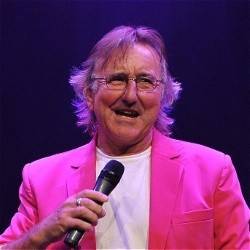
Writer and creator of The London Literary Pub Crawl.com. and a few plays. BohemianBritain.com. Event and Theatre Producer. Done quite a bit on the wireless too!
Full disclosure – I now consider Guy Masterson a friend and indeed I adapted the book and directed him in Charles Dickens’A Christmas Carol.(Yes, it IS touring this Christmas, thank you for asking! Schedule to follow soon!) But I first met Guy when he performed this piece at R.A.D.A. in London as part of the Dylan Thomas Centenary festival. Arranged by another Welsh-rooted performer and producer, Griff Rhys Jones, I was involved due to the London Literary Pub Crawl, so although this version is not new to me, it was once!
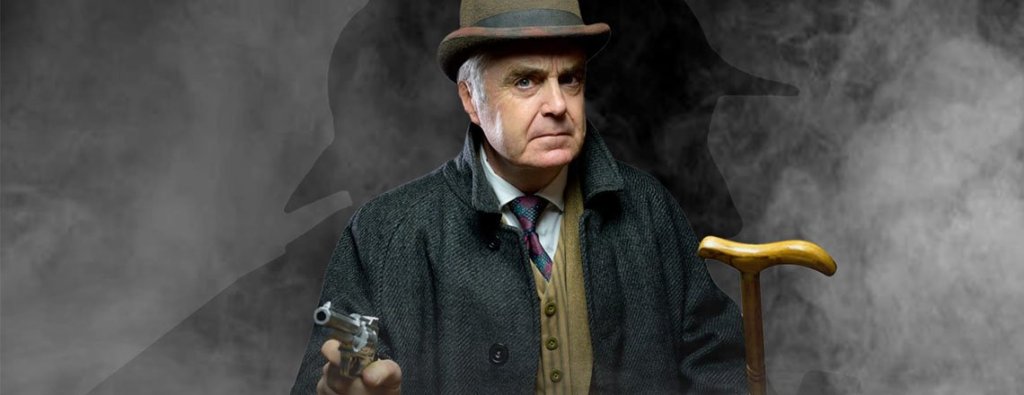
Guy Masterson
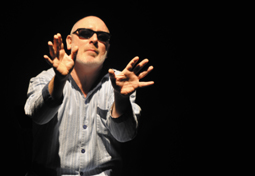
Dylan Thomas’ play for voices is about a day in the life of the fictional Welsh town of Llareggub (spell or say it backwards!) and its fractious, fantastic, fatalistic, funny and sometimes freaky inhabitants. Many think it’s based on New Quay, others Larne, both places Dylan lived in Wales, but the characters are universal. They moan and mourn and love and lust, and occasionally and hilariouly plan murder – and Guy Masterson performs them all perfectly. Using clever sound, shadows and physicality, we’re transported back to the crazy, lovely town. It’s a big ask to present UMW as a one-person show, but Masterson is the master of the genre. Occasionally Thomas’ text and language is so rich and heavy it can fall out of the ear and concentration is required, but as with all great performances, it is obvious that Guy Masterson really knows, and really likes these characters – and we feel his warmth for them. This was the ‘semi-skimed’ version – cut down in duration for the Edinburgh Fringe, but even when a young man squealed with delight and ran on to the stage to hug the performer, not once, but twice, Masterson simply smiled, returned the hug, pointed him back to his seat and took us straight back to Llareggub, without missing a beat.
There’s a reason Guy Materson has been performing Under Milk Wood for so long. He does it briliantly. Well done to Assembly Festival for bringing it back this strange festival year. Go and experience the original Coronation Street. See the Master Masterson and, as Dylan Thomas puts it, begin at the beginning…
The Waverley would definitely count as a Pretty Bohemian Pub Of The Day and will probably feature as such on the London Literary Pubs Instagram later. (When did I become such a media whore? I actually used to have over 10k followers on Twitter – I started even earlier than Donald Trump, I think. But then my account was hacked. I now have…ooo… at least 20 followers!)
But it’s a great pub, with friendly staff and, important for us media whores… sorry… bohemian creators… it has good, free Wi-fi. If you’re in Edinburgh for long, you’ll know that’s a definite asset. It might be the hills!
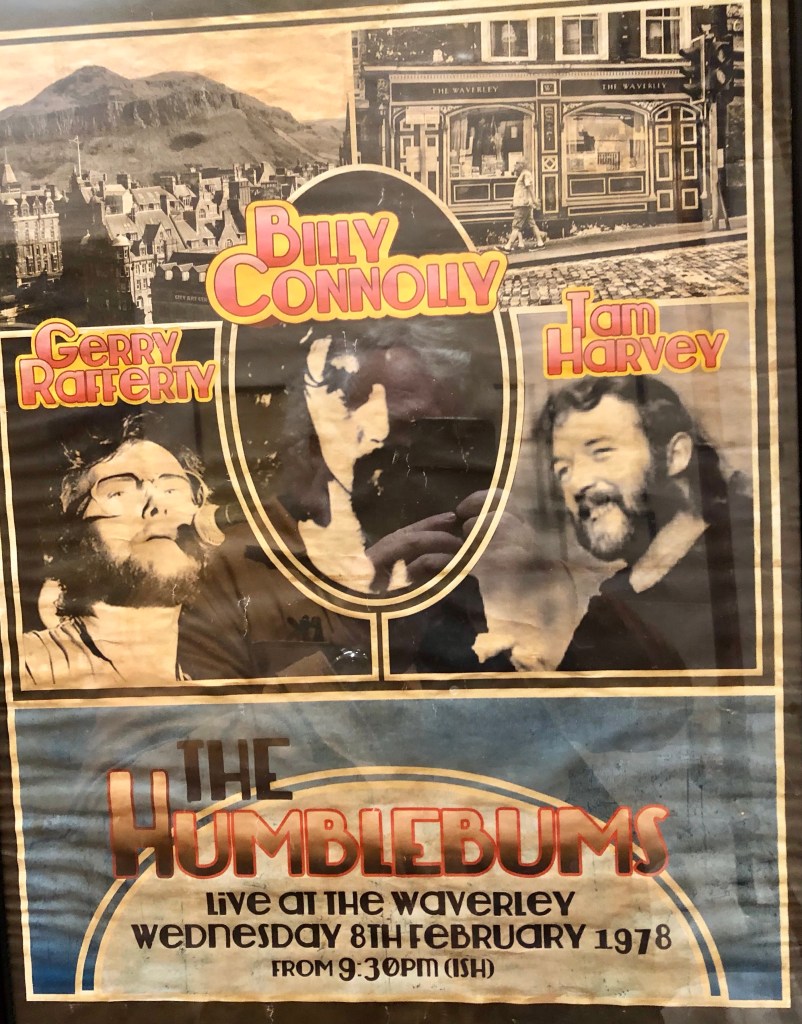
The Waverley usually has a few fringe events too. And I wonder what happened to these three?
After my brush with the Paparazzi yesterday, or rather my Fringe Umbrella’s brush (see my last post), I thought I should come clean to you. Because, you see, I HAVE been in a film. Yep, I was in a film, a full on mooovie. A Feature film. With Anthony Daniels – 3CPO from Star Wars. And, in fact, another few TV shows. Although none as big as the moooovie! With other stars, Neil Morrissey and Michael Elphick. It was filmed in Birmingham and in fact ‘Elph’ ( as we affectionally called Michael Elphick), used his pub in Henry-in-Arden, Warks, as a production base. We had some wild wrap nights! And now I’ve mentioned it here, you’ll obviously know I’m talking about the classic film by Dirk Productions – the people working on the ITV series Boom – The classic ‘I Bought A Vampire Motorcycle.’
I was here!
Yep. That was me. Even though most of my role as Pete ended up on the cutting room floor, I gave some great dying as I was killed in the gym scene in the final film. as you’ll obviously know.
And thanks for appreciating my talent.
Neil also had his girlfriend and dog in the film. But they weren’t as good as me. Well, at least the dog wasn’t. I think.
In the death scene, the Vampire Motorcycle was actually a cameraman sitting in a wheelchair, being pushed around by the second AD. We were supposed to show fear! And as you’ll know. of course, my performance was sublime. Even though, as we were filming in the autumn, I really felt like asking the cameraman in the wheelchair if he wanted a blanket.
I wondered it the people on the Edinburgh Royal Mile had seen it too. Who knows..!
Even more exciting, in spite, or maybe because, of my failed efforts to get a ticket to see Pip in Francis Bacon, the Pleasance press office have said they may be able to help me. Watch this space! The bacon could be sizzling!
I seem to have spent an awful amount of time today trying to spend money. More specifically, trying to buy tickets for Pip Upton’s show, Francis Bacon. at the Pleasance Courtyard. More difficult than telling the real Francis Bacon to stay off the champagne! So after three hours of trying, on my phone and laptop, on the Pleasance site AND the Fringe Box Office site, I still can’t buy a ticket. It’s not that I’m doing anything wrong, but the technologies seem not to be talking to each other. Although, cursing the hotel wi-fi and lack of decent 4G signal in Old Town (I think that’s where I am) I’m suddenly reminded of my first ever Fringe. I’d written and directed an adaptation of Shakesperear’s Henry V. It was called Henry V – Lion of England and I’d decided I could take Shaky’s story and make it more interesting! It’s not a comedy – although there is humour, folks! – but it is a one-man show and ends up with one man fighting the Battle of Agincourt for real. I was going to perform it myself until I realised the one actor I knew from AmDram was much better than me so Rob Stanson became the man! It used lots of special effects and has an original music score by Robbie Williams. We put it on for one night at the tiny Hexagon theatre at the Mac in Birmingham. At the end, everyone was running for the door, I thought, but it was in fact my first standing ovation! In the bar afterwards I was approached by John Starkey, who told us he and his partner Les Ward were Starward – they managed people like Jasper Carrott, Phil Cool and the Hank Wangford Band and would we like to go to the Edinburgh Festival?
“Yes, great. What’s the Edinburgh Festival,” I think was my response.
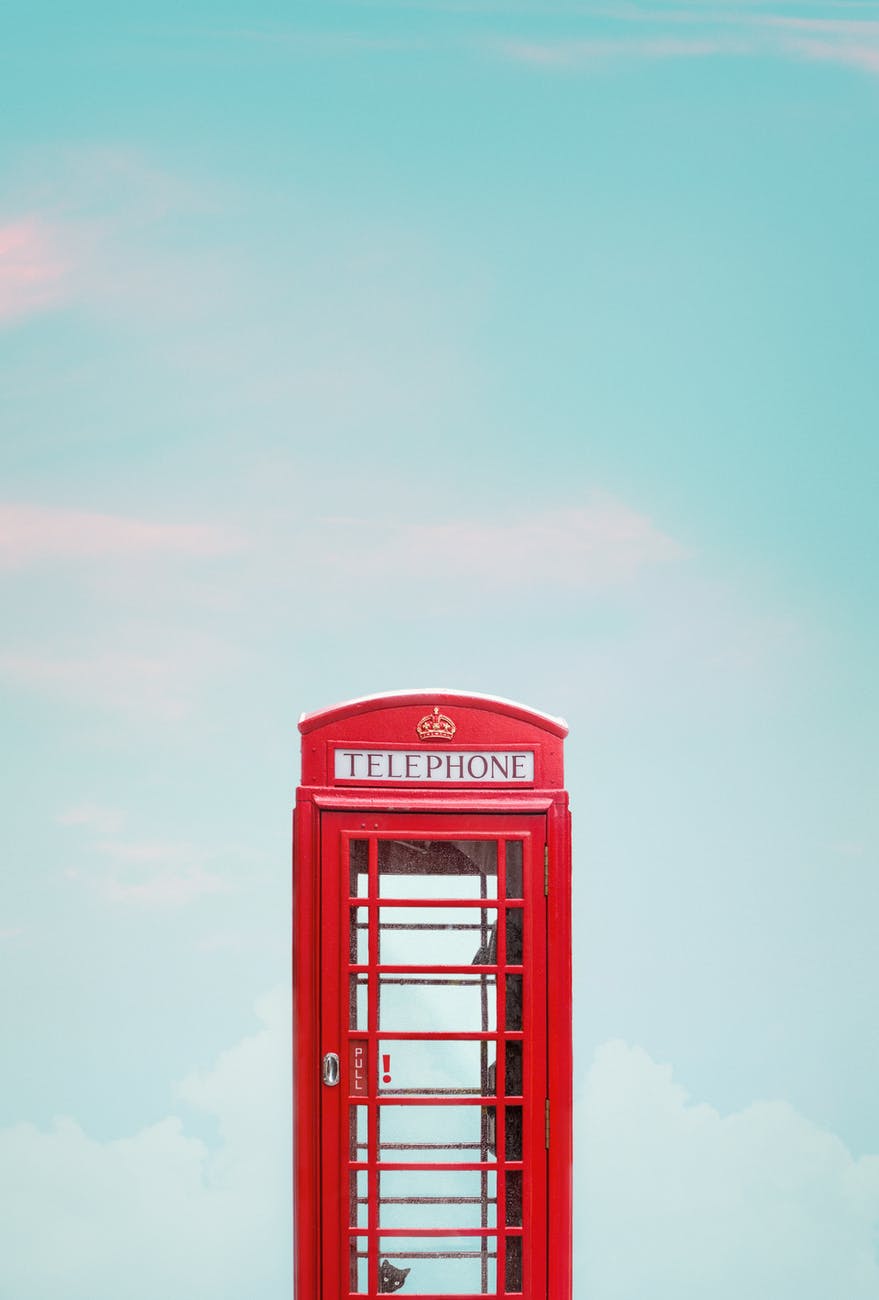
It was 1992 and it changed my life for reasons I won’t bore you with here. But I smile today as I remembered the headache of communications I had back then. Had I got enough 10 pence pieces for the phone? My press office back then was the red telephone box at the top of the Meadows. I used to cycle up there every day.
Media Centre from 1992’s Fringe. Photo by Tetyana Kovyrina on Pexels.com
But today I thought, in search of Bacon, I’d try one last thing. I walked to the Fringe Shop on the High Street, because I remembered there used to be a ticket office there. Alas, no more… or at least not this year. There are no physical tickets in this covid age, even though, this very day, Monday 9th August, 2021, Scotland lifted most of its covid restrictions.
So I got the number and email address of the Fringe Media office from the very helpful girl in the Fringe Shop at the counter they’d erected to prohibit entry. And being a bit of an anorak and to salve myself, I bought a Fringe mug and Fringe umbrella! Yep, anorak is what I am! I have dozens of theatre branded pens, socks, t-shirts… Having said that, the weather is so bad the umbrella becomes an inspired purchase.
And then a weird thing happens. I put up the branded Fringe umbrella and start walking up the Royal Mile, just to have a look at things. There are crowds about and a couple of street performers although not many at this reduced Fringe and the crowds are huddled under umbrellas. About 20 yards ahead of me, I see three paparazzi types with expensive cameras and huge telephoto lenses. Suddenly, almost as one, they point their cameras toward me and start taking pictures. I can hear the ‘snick, snick, snick’ of their motor drives. One breaks left, the other right and one, a woman, moves in my direction.
Wow, I think. There must be someone REALLY famous! I turn round to look behind me.
“No,” shouts the woman, “It’s you.”
I look back at her.
“The weather… the rain.. I work for the Scotsman newspaper. These are freelancers. But you; the long hair, the hat and the Fringe umbrella – it’s a great image.”
Long hair? It’s not that long is it? Maybe I do need a haircut. Where’s Luli – Guys Masterson’s young daughter – see yesterdays entry – when you need her!
Blimey. My umbrella is going to be famous! I smile at them and Pap Number Three says, “Would you mind walking up there by the statue then turning round and walking back towards us?”
Always a performer, loves! So I laugh and agree and do my walk past them to the constant accompaniment of their snapping cameras, then turn and walk back.
“This way, look this way,” says Pap Number one and I do so.
Finally they are done and I smile and wave and walk off. As I do I hear a group of people to the left of me whispering, “Who is he then? I don’t recognise him…”
I, as any star would, dwalink, ignore them and resume my normal, non-pap life. But I can’t help but smile when I hear another bunch of people behind me.
“It is! It’s him! I saw him in the film..!
I’m tempted to turn back and ask what film and who was I? But then I notice a couple of kids in the group and they sound so excited, I don’t want to spoil things for them by telling them it’s just my Fringe umbrella the paps are impressed with. And I am just a nobody who can’t even buy a ticket to see Francis Bacon.
Maybe it’s because it’s a Sunday, or maybe it’s because the Pleasance Courtyard REALLY needs – more likely – to sort out their stuff. But after one of the biggest shows they’ve had this year with Mervyn, we have a drink afterwards and the security staff are telling us to get out of the Courtyard at 10.30! I’d ordered a Stein at 10.20. I’m not sure whyI found this so depressing! Fortunalty, there’s a brilliant pub just down the road. It’s called the Holyrood 9A and they sorted us out!
It was a good evening overall though. After Pie and Mash in the Assembly Gardens, I literarily bumped into John Slater, an old chum who I initially met when we both worked at BRMB Radio in Birmingham, but then later on was key in the success of the Maverick Theatre Company. He came to help me out with a show for two weeks and ended up staying for seven years! We had a few beers, then I was off to see Mervyn Stutter again with tonight’s guests who included Guy Masterson, another stalwart of the Edinburgh Fringe. I recorded some of the night for my radio show and I may put an extract on here later, now that Mervyn has finished his run and returned home.
It was great seeing Guy again and an added bonus was seeing his daughter, Luli. At 16, she is also a fringe veteran, having first travelled up here at the age of 4! At the last Edinburgh Festival she was 14 and I got to know her quite well over the month. She is warm and open and not at all precocious and I found it quite amusing how we used to end up chatting. She asked my advice about a nail polish colour! And gave me a few ideas about getting a hair cut. And I won’t be taking her down the pub for at least another two years, but she’s a good ‘un and a credit to her Mom and Dad!
I got to know Guy though the Dylan Thomas Centenary Festival in London, the brain-child of comedian and presenter Griff Rhys Jones. Guy is now a treasured friend as well as a colleague. I directed Guy in my adaptation of Dicken’s ‘A Christmas Carol’ If you’ve seen it, the coat he wears is the one I bought for my Shakespearean adaptation, ‘Henry V – Lion of England’ In 1992! It’s a real showbiz coat! On stage, Guy does the first speech from ‘Under Milk Wood’ by Dylan Thomas, a show he is presenting here in Edinburgh this week. He does a great job and then is very professionally interviewed by Mervyn.
Having arrived in Edinburgh last night, checked into the hotel and gone straight to the Pleasance Courtyard to see Mervyn Stutter (see previous post) today it was time to wander back to my old Assembly Festival haunts. And although there is activity after the barren last festival season, it feels strangely ghostly and denuded.
Take the Assembly Club Bar. It’s been in different locations over the years, but it’s the hub of the Assembly Festival and democratically exclusive It would be rockin’ till 4am for the whole of the Fringe. And once or twice, I would be there to see the end of the night..! It was where you would bump into other Assembly artists and often members of the media. Memories of my last Assembly festival include Eddy Izzard’s new frock and the comedy act West End Producer in his mask and costume for one whole sweltering night. He kept in character even when one of the beautiful, slightly merry members of my cast started ‘slut-dropping’ in front of him. And because my birthday is in August, I remember the enigmatic, interesting and pleasant Paul, editor of the Fringe Review, presenting me with an Edinburgh University notebook and pen and telling me to write a piece for next year. I did write a new script, but, of course, next year never came…
And so the once glittering, illuminated entrance to the Assembly bar is what it always was and as I had never seen it – a pedestrian, dowdy entrance to a university building. And the Assembly studios, gone. And the Blue Room where we sold out our last production, doesn’t exist at all. It was a venue built only for the Fringe.
The Brass Monkey, Edinburgh. Due to appear in the Best Boho Pub Guide soon!
But not everything has changed. The Brass Monkey Pub, most of the designer Coffee shops and The Assembly Gardens are still here. The Gardens has its outdoor venue and food concessions, although drinks are ordered to the table now – at least until tomorrow, when Covid rules ease in Scotland. But you can still pay £8.50 for Pie, Mash and Sauce in a cardboard box. No idea what the sauce is. But it’s rather tasty. And, oh yes and it still rains. Yes… we’ll always have the rain…
It’s late night In the Pleasance Courtyard, Edinburgh. I’ve just seen, for the first time, Mervyn Stutter’s act. I’ve known for years he’s done a show called Pick of The Fringe, but I’ve never seen it. And now, in this disabled, post-covid Fringe world, he’s apparently gone back 34 years to his Fringe roots, with a mix of comedy, song and… dare I say it…variety!
Mervyn Stutter.
Yep. Variety! I’ve know Mervyn for a few years due to the strange Fringe camaraderie that emerges from artists who want to make stuff – present stuff – make things happen – and know that Edinburgh has this now 74 year tradition. It’s a weird, mad and sometimes, but actually never really, bad space. It’s brutal, but brilliant. For the last two festivals I’ve had digs with Merv’s marketing team – an introduction induced by Guy Masterson.
And based on what I’ve seen tonight, and in spite of THREE Steins of lager (look it up, hic!) make sure you go see Mervyn. He does topical songs; adaptations of classics that are hilarious and topical. But his killer talent is his authenticity. Part of his show includes interviewing other artists, tonight singer Christine Bovill. And when Mervyn says he loves her voice, we know he means it and we are ready to love her voice too. Which we did.
There’s a reason Mervyn Stutter has been on the Fringe for 34 years. Maybe not the slickest, newest, hottest thing. But believe me, he’s quality. Mervyn Stutter is the real deal. Book now for next year! I’ll see you there!